Dancers
and
Honey
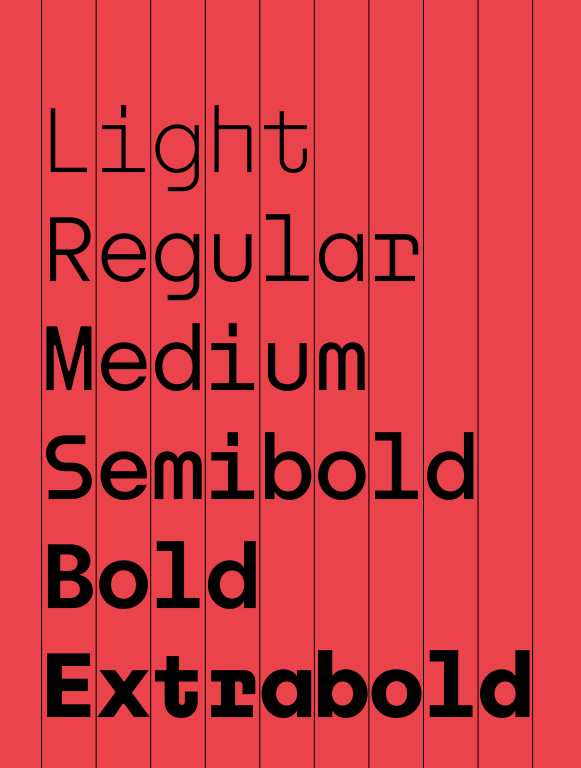
- Light
- Light Italic
- Regular
- Italic
- Medium
- Medium Italic
- Semibold
- Semibold Italic
- Bold
- Bold Italic
- Extrabold
- Extrabold Italic
Related Collection Riant, Riant Display
- Designer
- Sibylle Hagmann
- Version
- 1
- Year published
- 2026
- Pricing
- $350.00, starting at $50.00
- Formats
- .otf, .ttf, .woff, variable
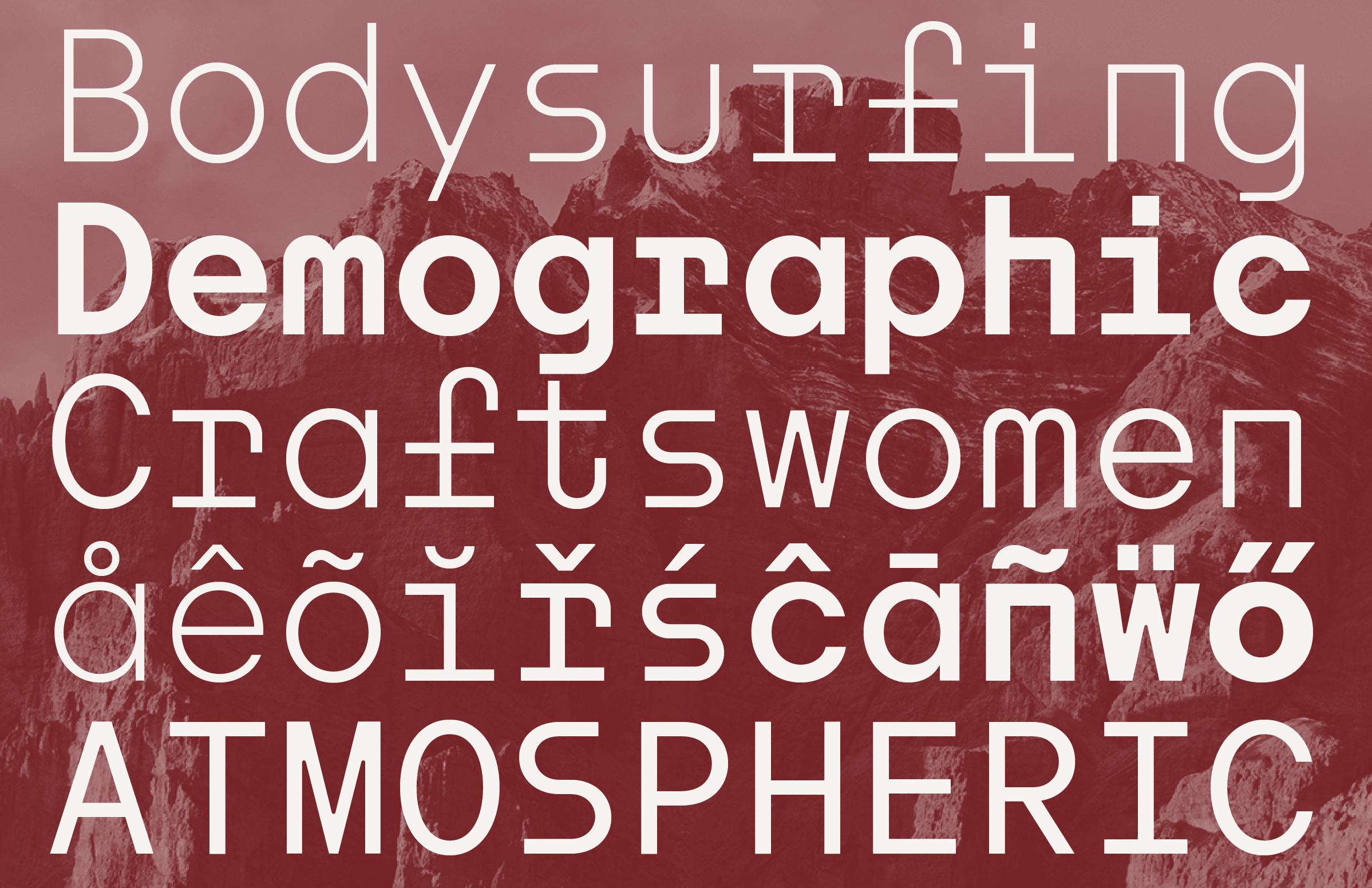
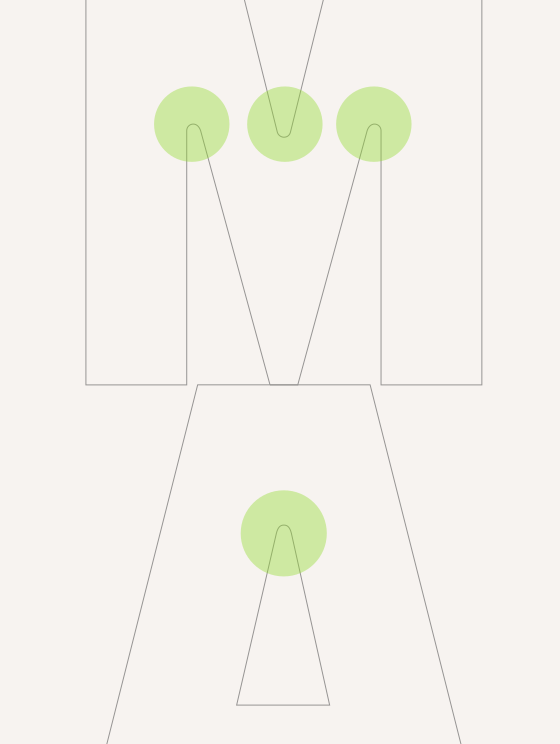
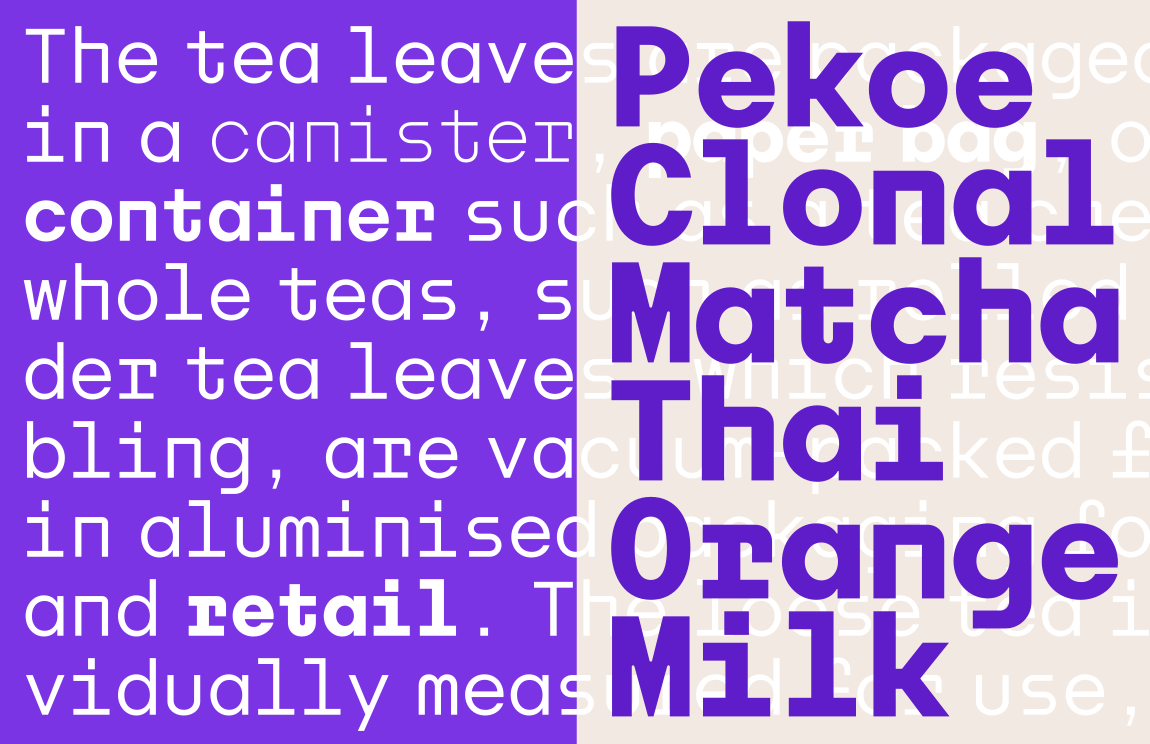
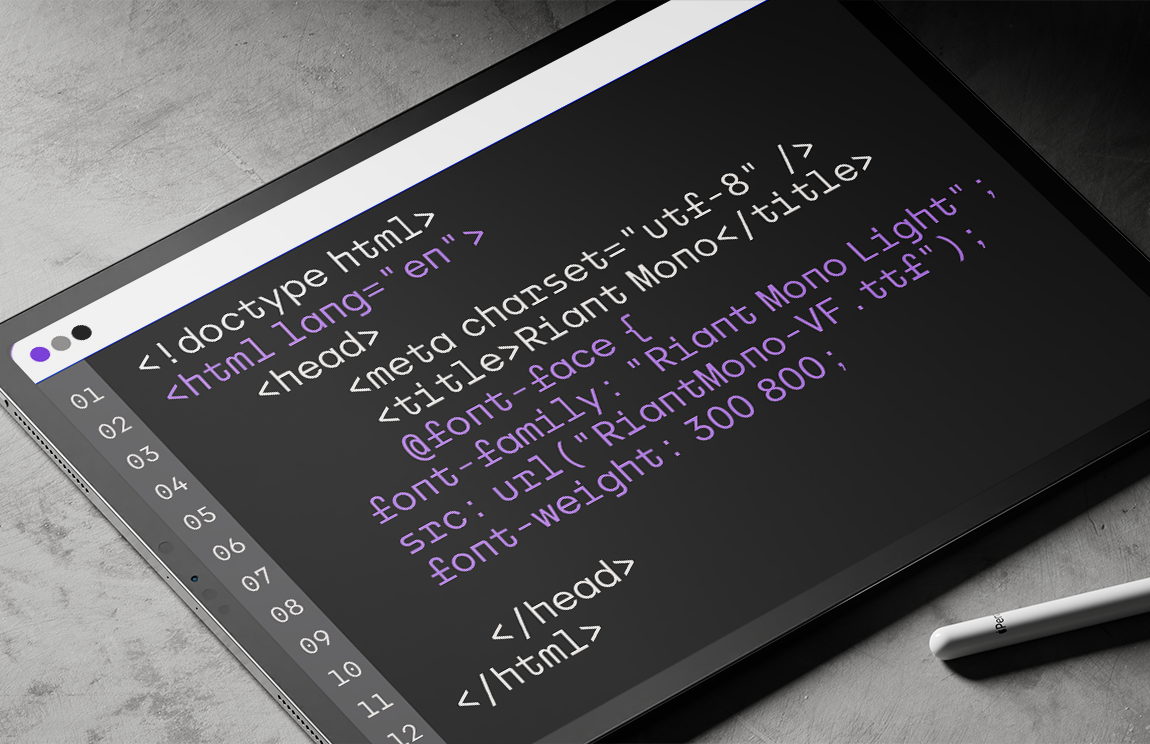
Riant Mono extends the geometric foundation of the Riant collection into a monospaced structure. It occupies a space between Riant Text and Riant Display, combining the measured proportions and optical refinements of the text design with selected details from the more expressive display face. The vertical metrics follows that of Riant Text, establishing a clear structural connection between the two, while other forms are adapted to accommodate the particular demands of a fixed-width system. Details from Riant Display are introduced selectively and adjusted to fit in with the mono-spaced design. The arched inner apex of A and the V crotch, for example, are derived from the display design and adapted to remain subtle at a smaller proportion. The folded terminals of letters f and t are display features that bring a degree of visual distinction to the otherwise regular rhythm of the monospaced framework. Rather than treating monospacing as a purely mechanical constraint, Riant Mono uses the fixed-width framework as part of its design logic. Its relationship to both Riant Text and Riant Display creates a continuum between reading and display, geometric discipline and expressive detail. Riant Mono is designed for interfaces, tabular information, editorial applications, and settings where the regular rhythm of monospaced typography benefits from an expressive voice.
Afrikaans, Albanian, Asu, Basque, Bemba, Bena, Bosnian, Catalan, Cebuano, Chiga, Colognian, Cornish, Corsican, Croatian, Czech, Danish, Dutch, Embu, Esperanto, Estonian, Faroese, Filipino, Finnish, French, Friulian, Galician, Ganda, German, Gusii, Hungarian, Icelandic, Ido, Inari Sami, Indonesian, Interlingua, Irish, Italian, Javanese, Jju, Jola-Fonyi, Kabuverdianu, Kalaallisut, Kalenjin, Kamba, Kikuyu, Kinyarwanda, Koyra Chiini, Koyraboro Senni, Kurdish, Latvian, Lithuanian, Lojban, Low German, Lower Sorbian, Luo, Luxembourgish, Luyia, Machame, MakhuwaMeetto, Makonde, Malagasy, Malay, Maltese, Manx, Māori, Meru, Morisyen, Nigerian Pidgin, North Ndebele, Northern Sami, Northern Sotho, Norwegian Bokmål, Norwegian Nynorsk, Nyanja, Nyankole, Occitan, Oromo, Polish, Portuguese, Romanian, Romansh, Rombo, Rundi, Rwa, Samburu, Sango, Sangu, Sardinian, Scottish Gaelic, Sena, Shambala, Shona, Slovak, Slovenian, Soga, Somali, South Ndebele, Southern Sotho, Spanish, Sundanese, Swahili, Swati, Swedish, Swiss German, Taita, Taroko, Tasawaq, Teso, Tsonga, Tswana, Turkish, Turkmen, Upper Sorbian, Vunjo, Walloon, Walser, Welsh, Western Frisian, Wolof, Xhosa, Zarma, Zulu
All Roman and Italics styles include the same set of glyphs with additional stylistic alternatives.