LOADING
Computing
Thin
Microcomputers became popular in the 1970s and with the advent of increasingly powerful micro-processors.
Light
Development
Extralight
Of the early “box of switches”-type microcomputers, the MITS Altair 8800 (1975) was arguably the most famous. Most of these simple, early microcomputers were sold as electronic kits—bags full of loose components which the buyer had to solder together before the system could be used. Microcomputer module LSI-11/2. The period from about 1972 to 1976 is sometimes called the first generation of microcomputers. Many companies such as DEC, National Semiconductor, Texas Instruments offered their microcomputers for use in terminal control, peripheral device interface control and industrial machine control.
Regular
There were also machines for engineering development and hobbyist personal use. In 1975, the Processor Technology SOL-20 was designed, which consisted of one board which included all the parts of the computer system. The SOL-20 had built-in EPROM software which eliminated the need for rows of switches and lights. The MITS Altair just mentioned played an instrumental role in sparking significant hobbyist interest, which itself eventually led to the founding and success of many well-known personal computer hardware and software companies, such as Microsoft and Apple Computer. Altair itself was a mild success.
Semibold
The ability to connect to a monitor (screen) or TV set allowed visual manipulation of text and numbers. The BASIC language, which was easier to learn and use than raw machine language, became a standard feature. These features were already common in mini computers, with which many hobbyists and early produces were familiar. In 1979, the launch of the VisiCalc spreadsheet, initially for the Apple II, first turned the micro computer from a hobby for computer enthusiasts into a business tool. Unlike large, costly mainframes, time-sharing by many people at the same time is not used with personal computers.
Medium
Random-access memory became cheap enough to afford dedicating approximately 1–2 kilobytes of memory to a video display controller frame buffer, for a 40 × 25 or 80 × 25 text display or blocky color graphics on a household television. This replaced the slow, complex, and expensive teletypewriter that was previously common as an interface to minicomputers and mainframes, improvements in cost and usability.
Semibold
Modern desktop computers, video game consoles
Bold
1–2
kilobytes
of
memory
Medium
Microcomputers fit well on or under desks or tables, so that they are within easy access of users. Bigger computers like minicomputers, mainframes, and supercomputers take up large cabinets or even dedicated rooms. A microcomputer comes equipped with at least one type of data storage, usually RAM. Although some microcomputers (particularly early 8-bit home micros) perform tasks using RAM alone, some form of secondary storage is normally desirable. In the early days of home micros, this was often a data cassette deck in many cases as an external unit. Later, secondary storage in the form of a floppy disk was built into the micro computer’s case.
Extrabold
Zilog E80
Thin Italic
Sacramento
Regular
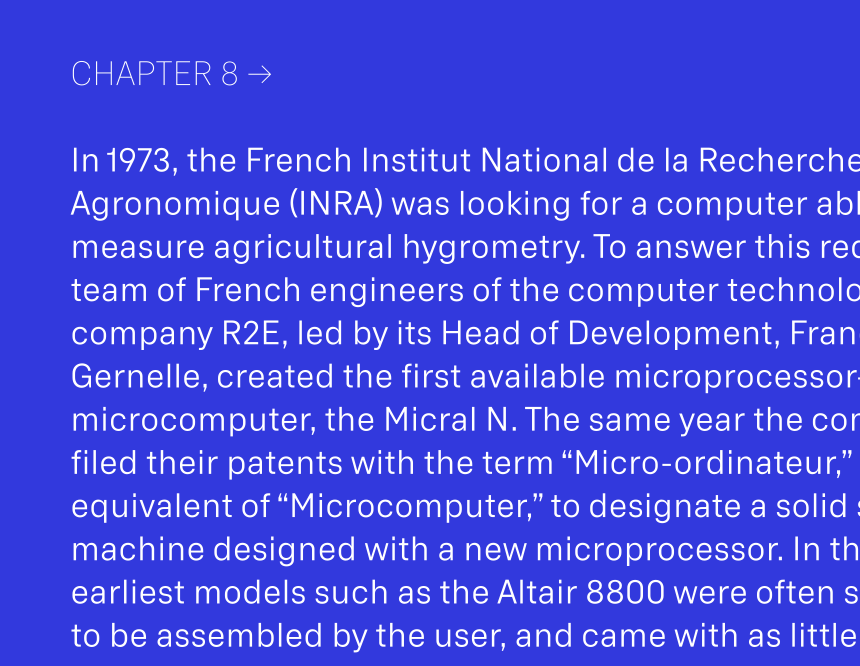
About a hundred Micral-N were installed in the next two years, followed by a new version based on the Intel 8080. Meanwhile, another French team developed the Alvan, a small computer for office automation which found clients in banks and other sectors. The first version was based on LSI chips with an Intel 8008 as peripheral controller (keyboard, monitor and printer), before adopting the Zilog Z80 as main processor. In late 1972, a Sacramento State University team led by Bill Pentz built the Sac State 8008 computer, able to handle thousands of patients’ medical records. The Sac State 8008 software components: a disk a hundred Micral-N were installed. The first version was based on LSI chips with an Intel 8008 as peripheral controller (keyboard, monitor and printer), before adopting the Zilog Z80 as main processor. In late 1972, a Sacramento State University team led by Bill Pentz built the Sac State 8008 computer, able to handle thousands of patients’ medical records. The Sac State 8008 was designed with the Intel 8008. It had a full set of hardware installed in the next two years, followed by a new version based on the Intel 8080. Meanwhile, another French team developed the Alvan, a small computer for office automation which found clients in banks and other sectors.
Bold Italic
By today’s standards, they were very large about the size of a refrigerator and cost prohibitive, typically tens of thousands of US dollars. However, they were much smaller, less expensive, and generally simpler to operate than many of the mainframe computers of the time. Therefore, they were accessible for individual laboratories and research projects.
Semibold Italic
Vision &
Mission
Thin
0123456789
Medium
OPTIMUM
Specimen PDF Download Test fonts Buy licenses

  • Thin
  • Thin Italic
  • Extralight
  • Extralight Italic
  • Light
  • Light Italic
  • Regular
  • Italic
  • Medium
  • Medium Italic
  • Semibold
  • Semibold Italic
  • Bold
  • Bold Italic
  • Extrabold
  • Extrabold Italic

Designer
Sibylle Hagmann
Version
1
Year published
2025
Pricing
$400.00, starting at $50.00
Formats
.otf, .ttf, .woff, variable

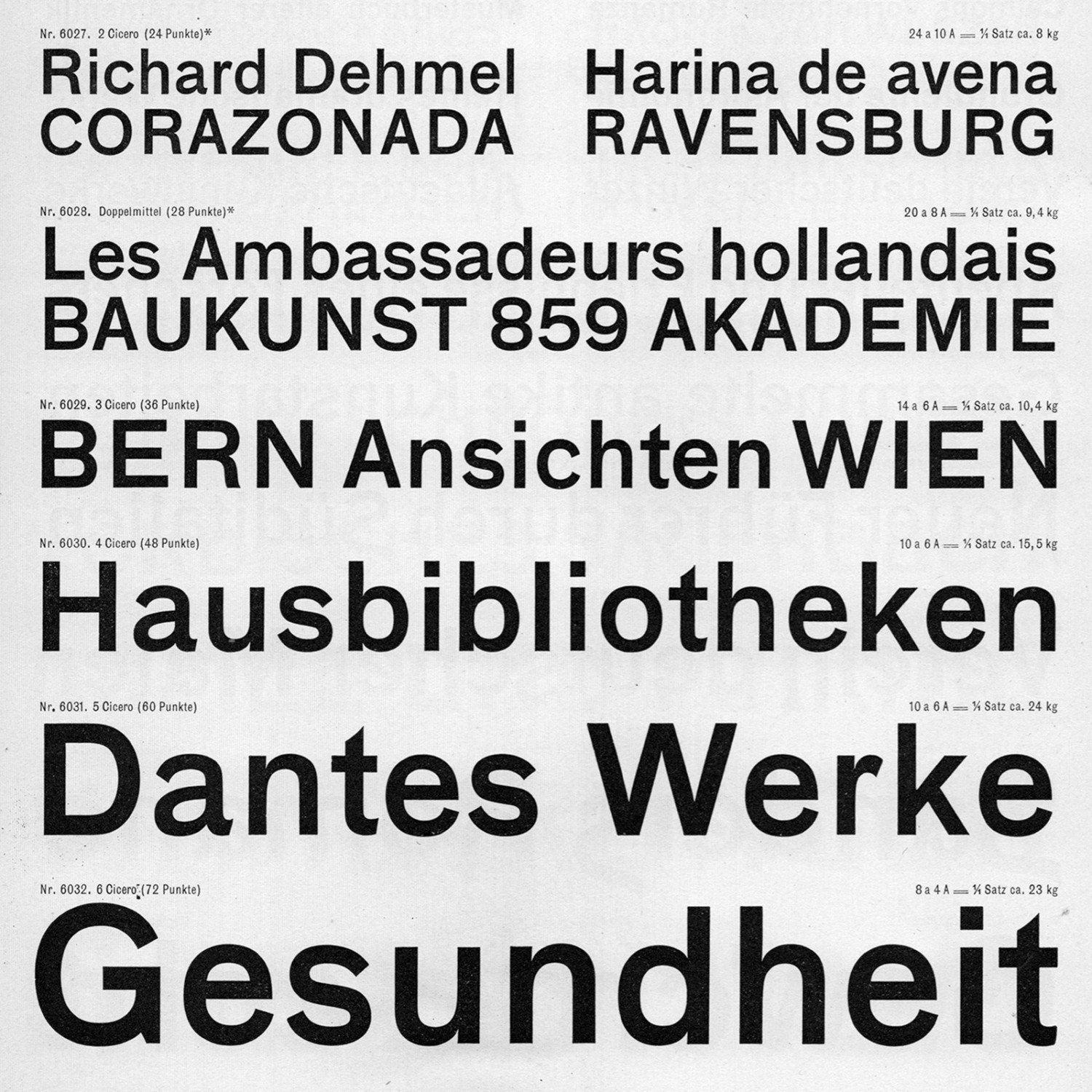
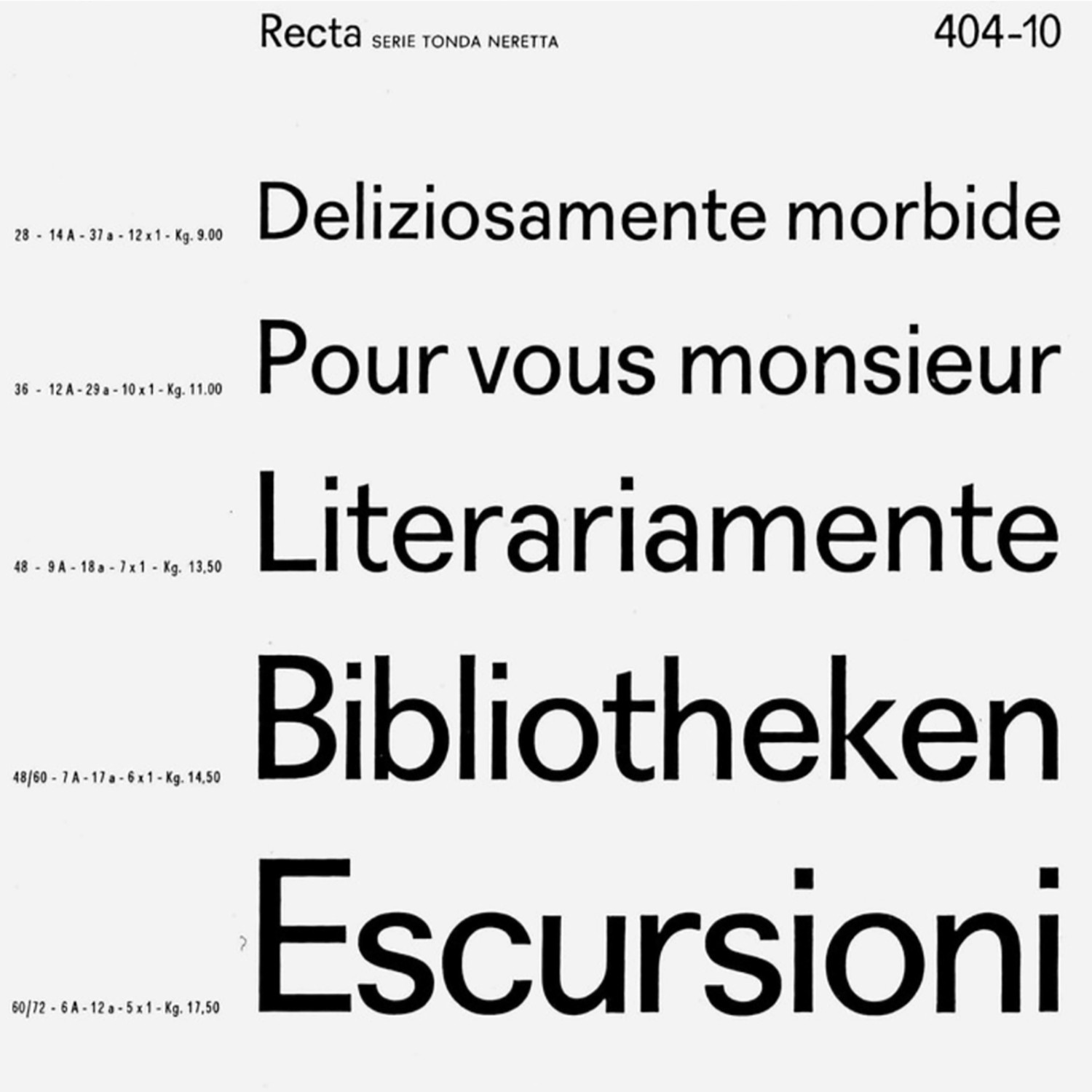
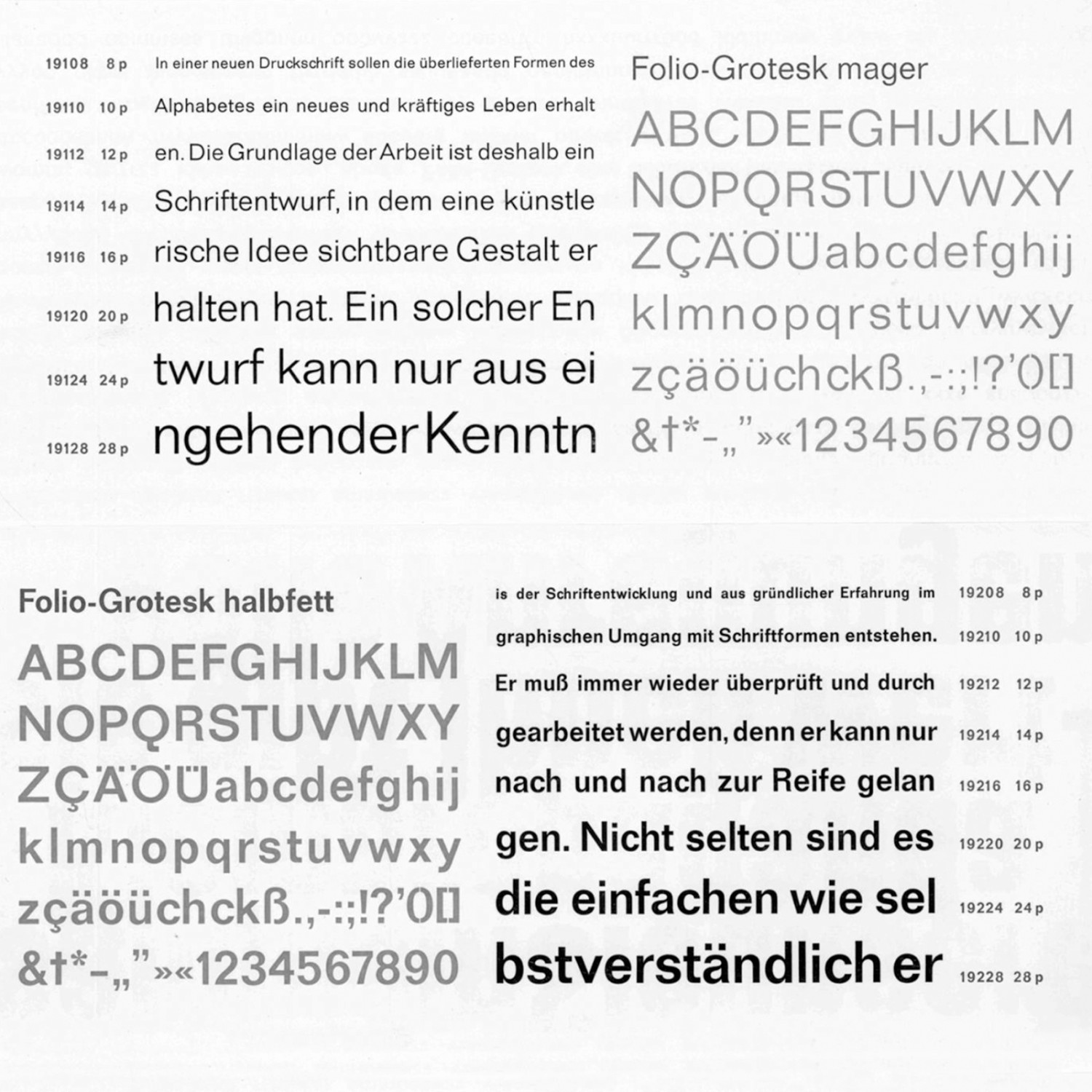
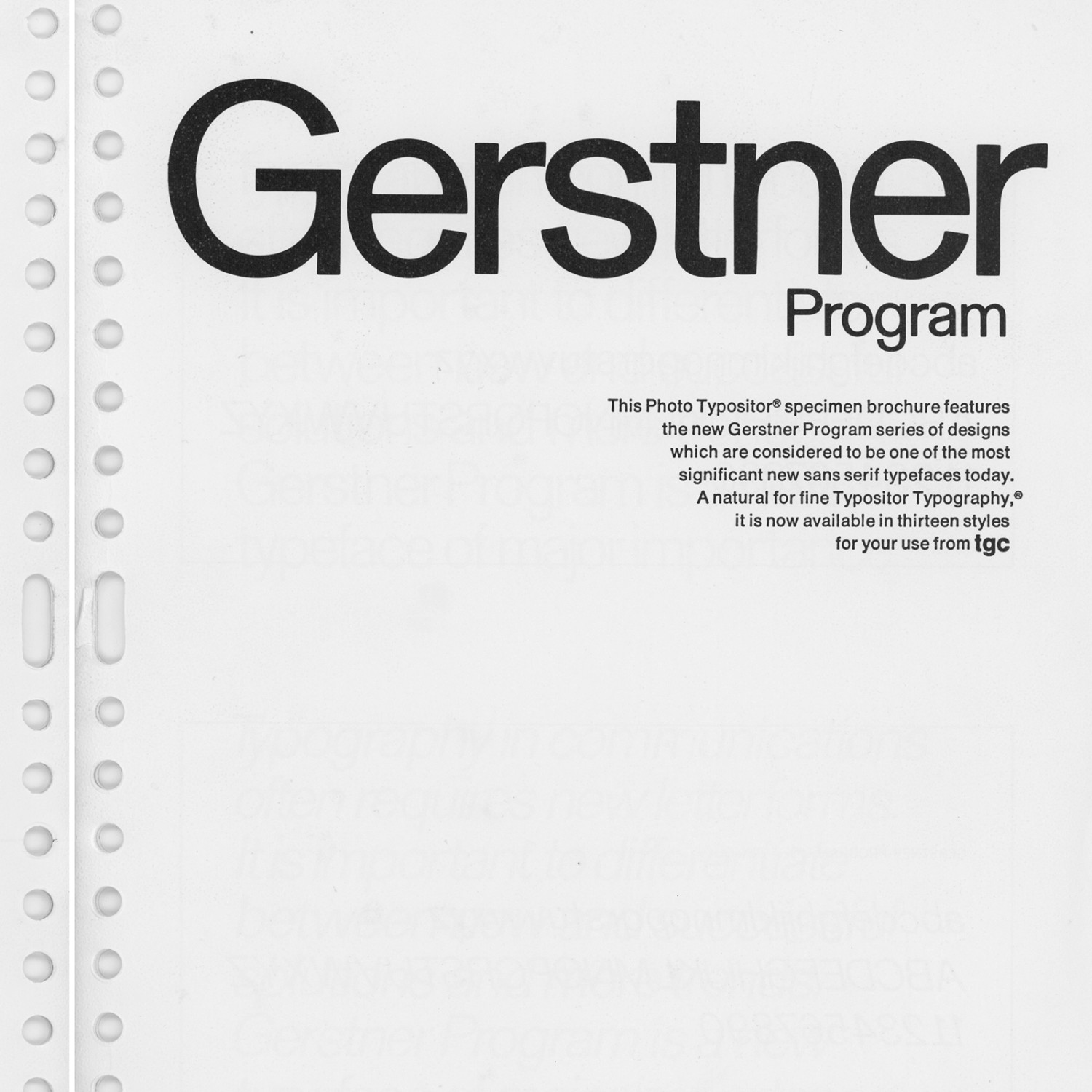
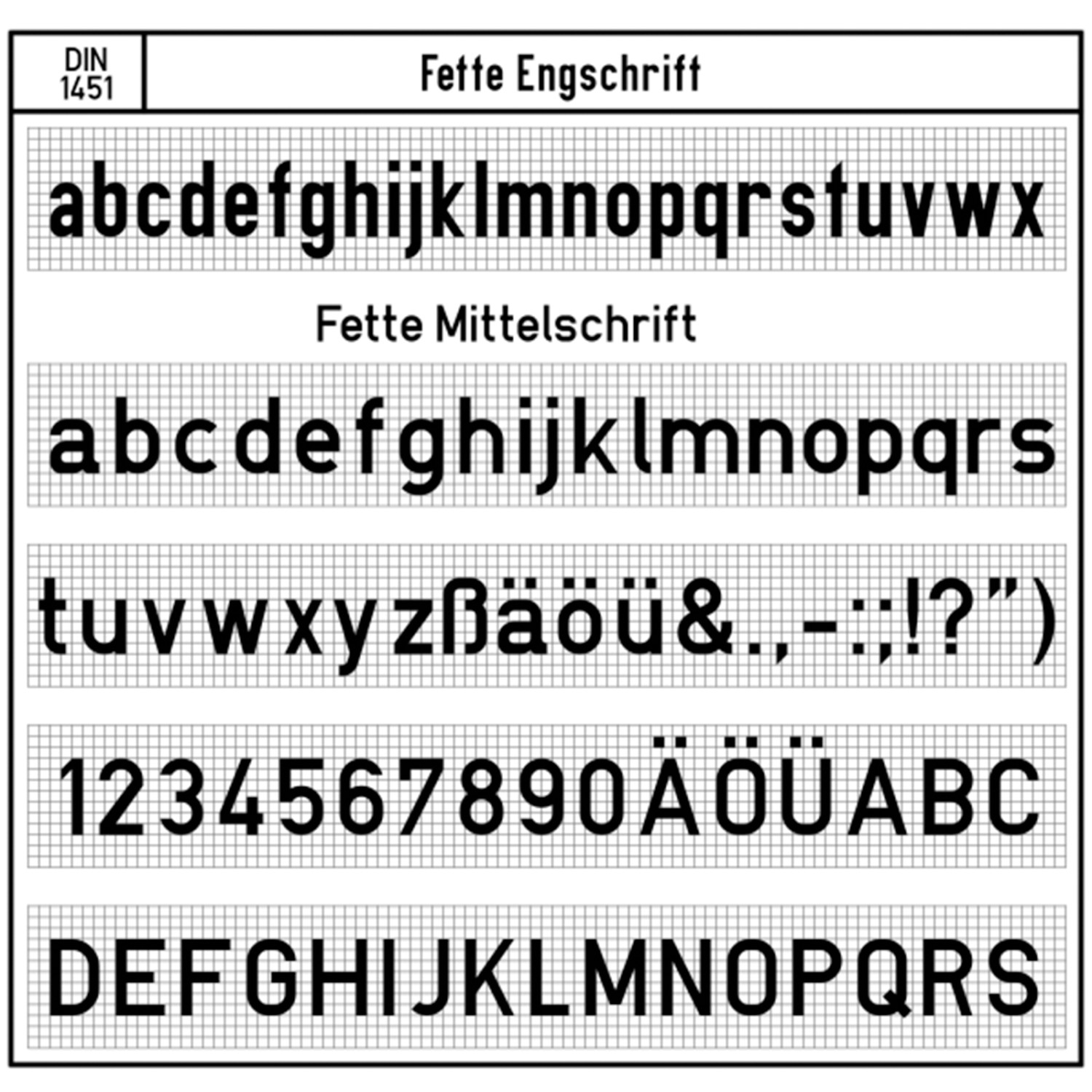
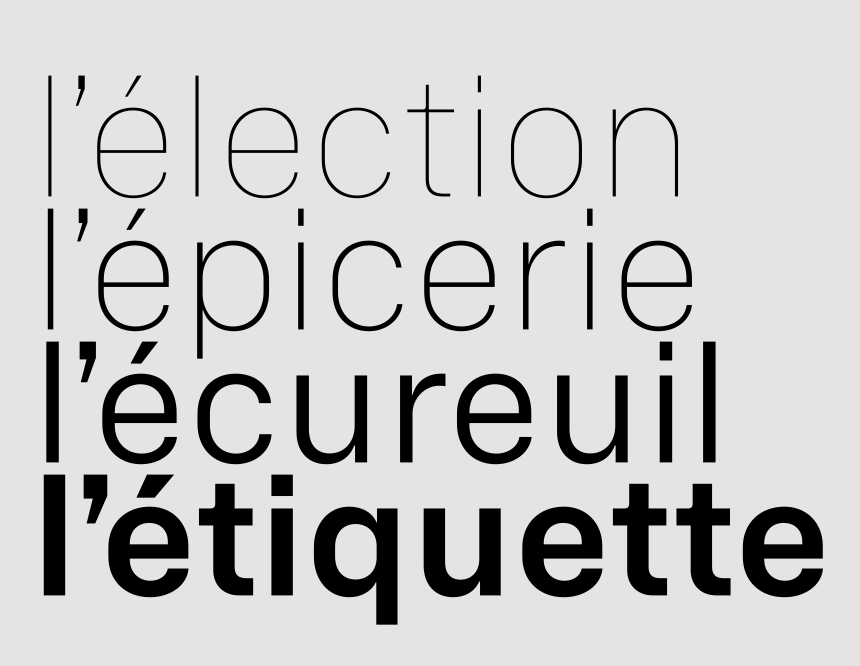
Datei Grotesk emerged from an extensive exploration of sans serif typefaces that trace their origins back to the categorization of grotesques and neo-grotesques. The design process started in 2017, with the gradual development of the family contextualizing defining design features of legacy grotesque typefaces like Akzidenz, DIN 1451, Breite, Folio, Gerstner Programm, Haas Unica, Record Gothic, and Recta, among others. The design aims for a balanced approach to uniformity, featuring clear shapes, effortless readability, and a progressive system for both roman and italic styles. The final design strikes a balance between restraint with form qualities aiming to blend rationality with friendliness. The slight straight-sided letter forms give the type a subtle industrial flair, creating robust textures without appearing too rigid. Datei Grotesk’s uniform, no-nonsense features foster visual impact while maintaining flexibility and coherence in form. The family is offered in variable gamuts for roman and italic and a static font style-range that recalls legacy grotesque family structures. Open Type feature sets include support for alternate character options, figures for text and tables, dynamic fractions, case sensitive forms, and expanded language capabilities, among more, making the type family suitable for contemporary and versatile design applications.
 

Afrikaans, Albanian, Asu, Basque, Bemba, Bena, Bosnian, Catalan, Cebuano, Chiga, Colognian, Cornish, Corsican, Croatian, Czech, Danish, Dutch, Embu, Esperanto, Estonian, Faroese, Filipino, Finnish, French, Friulian, Galician, Ganda, German, Gusii, Hungarian, Icelandic, Ido, Inari Sami, Indonesian, Interlingua, Irish, Italian, Javanese, Jju, Jola-Fonyi, Kabuverdianu, Kalaallisut, Kalenjin, Kamba, Kikuyu, Kinyarwanda, Koyra Chiini, Koyraboro Senni, Kurdish, Latvian, Lithuanian, Lojban, Low German, Lower Sorbian, Luo, Luxembourgish, Luyia, Machame, MakhuwaMeetto, Makonde, Malagasy, Malay, Maltese, Manx, Māori, Meru, Morisyen, Nigerian Pidgin, North Ndebele, Northern Sami, Northern Sotho, Norwegian Bokmål, Norwegian Nynorsk, Nyanja, Nyankole, Occitan, Oromo, Polish, Portuguese, Romanian, Romansh, Rombo, Rundi, Rwa, Samburu, Sango, Sangu, Sardinian, Scottish Gaelic, Sena, Shambala, Shona, Slovak, Slovenian, Soga, Somali, South Ndebele, Southern Sotho, Spanish, Sundanese, Swahili, Swati, Swedish, Swiss German, Taita, Taroko, Tasawaq, Teso, Tsonga, Tswana, Turkish, Turkmen, Upper Sorbian, Vunjo, Walloon, Walser, Welsh, Western Frisian, Wolof, Xhosa, Zarma, Zulu

All Roman and Italics styles include the same set of glyphs with additional stylistic alternatives.
Datei Grotesk buying options

Choose fonts

Datei Grotesk Complete Collection All Styles + Variable fonts
$400.00
Datei Grotesk Mini Collection Core styles only
$250.00
Datei Grotesk Thin
$50.00
Datei Grotesk Thin Italic
$50.00
Datei Grotesk Extralight
$50.00
Datei Grotesk Extralight Italic
$50.00
Datei Grotesk Light
$50.00
Datei Grotesk Light Italic
$50.00
Datei Grotesk Regular
$50.00
Datei Grotesk Italic
$50.00
Datei Grotesk Medium
$50.00
Datei Grotesk Medium Italic
$50.00
Datei Grotesk Semibold
$50.00
Datei Grotesk Semibold Italic
$50.00
Datei Grotesk Bold
$50.00
Datei Grotesk Bold Italic
$50.00
Datei Grotesk Extrabold
$50.00
Datei Grotesk Extrabold Italic
$50.00

Choose the license

Total

$0.00